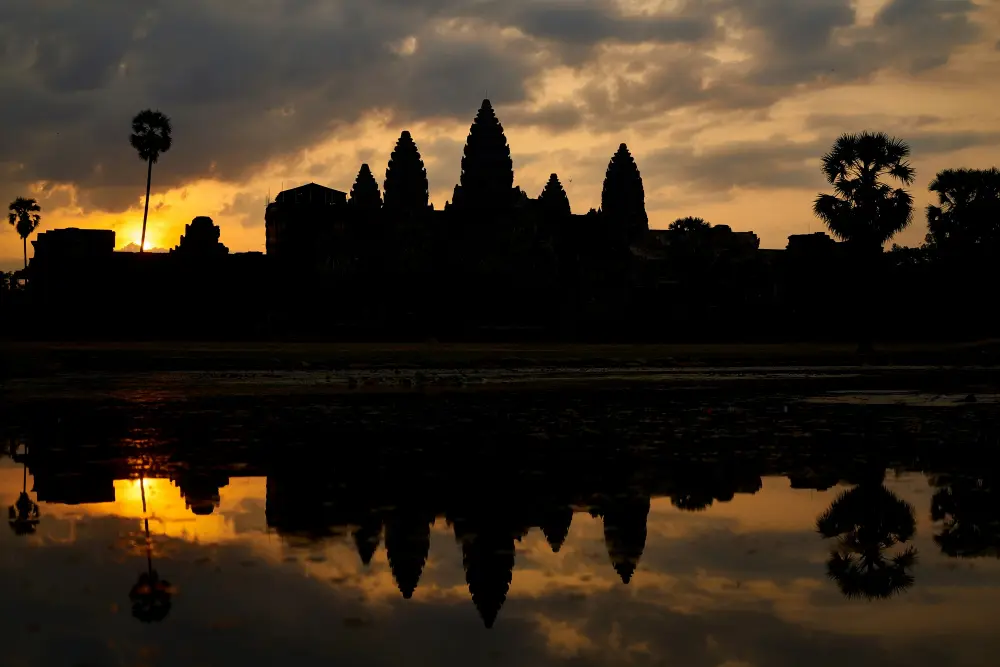
Your first morning at Angkor Wat can shape the rest of your Cambodia experience. Understanding exactly where the temple sits within the vast Angkor Archaeological Park and planning your route before sunrise helps you spend more time exploring and less time figuring out directions. With a little preparation, you can enjoy the iconic sunrise, visit nearby temples, and return to Siem Reap with unforgettable memories.
Where Is Angkor Wat and Why Its Location Matters
Angkor Wat is located within the Angkor Archaeological Park, a UNESCO World Heritage Site covering approximately 400 square kilometres just north of Siem Reap. The park preserves the remains of the Khmer Empire, including hundreds of temples, reservoirs, ancient roads, and archaeological sites that date back to the 9th century.
Because of its central location, Angkor Wat serves as the starting point for many temple itineraries that also include Bayon, Ta Prohm, and Preah Khan. Staying just minutes from the Angkor World Heritage sites allows visitors to arrive before large tour groups and enjoy a more relaxed beginning to the day. It also reduces travel time, making it easier to fit several remarkable temples into a single morning.
Just a Short Drive From Central Siem Reap
Angkor Wat is situated around six kilometres from central Siem Reap, making it easily accessible from most hotels in the city. Depending on traffic and your chosen mode of transport, the journey usually takes between 15 and 20 minutes. This convenient location is one reason why Siem Reap has become the main gateway for travellers visiting the temples.
Leaving early in the morning allows you to avoid heavier traffic around sunrise while enjoying cooler temperatures. Jaya House River Park is located around 12 minutes by car from Angkor Wat, making it a convenient base for exploring the temple complex.
Easy to Reach From the Park's Main Entrance
Visitors enter Angkor Archaeological Park through official ticket checkpoints before continuing towards Angkor Wat along well-maintained roads. Clear signs throughout the park make navigation straightforward, even for first-time visitors. Most transport providers are familiar with the most efficient routes and common visitor schedules.
The main entrance provides direct access to the temple, allowing visitors to reach the famous western causeway without unnecessary detours.
How an Angkor Wat Map Helps You Navigate the Temple Complex
If you're wondering where is Angkor Wat, a good Angkor Wat map is one of the best tools to help you plan your visit. Located within the Angkor Archaeological Park near Siem Reap, the temple complex is much larger than it appears in photos, with long walkways, multiple galleries, and several key viewpoints.
Before visiting Angkor Archaeological Park, take a few minutes to study the map. It helps you locate the main entrance, reflecting pools, central towers, and popular sunrise spots, making it easier to explore without missing important highlights.
An Angkor Wat map is also useful for planning routes to nearby temples such as Bayon, Ta Prohm, Thommanon, and Chau Say Tevoda. Since the archaeological park covers a vast area and some roads operate in one direction, planning your route in advance helps reduce unnecessary travel and gives you more time to enjoy each temple.
Whether you're visiting with a one-day or multi-day pass, understanding where Angkor Wat sits within the wider archaeological park makes exploring Cambodia's most famous heritage site smoother, more efficient, and far more enjoyable.
Prepare for Visiting Angkor Archaeological Park on Your First Morning
- Arrive Before Sunrise: Many arrive between 4.45 am and 5.15 am to experience the famous sunrise behind Angkor Wat's distinctive towers. Arriving early gives you time to find a good viewing position before larger crowds begin gathering around.
- Pack Essentials: Bring drinking water, sunscreen, insect repellent, a hat, sunglasses, comfortable walking shoes, and a fully charged phone or camera. Lightweight clothing is recommended, but visitors should ensure their shoulders and knees remain covered when entering sacred temple areas.
- Follow Temple Etiquette: Angkor Wat continues to serve as an important religious and cultural site, making respectful behaviour essential. Visitors should dress modestly, remain on designated pathways, avoid touching fragile carvings, and speak quietly while exploring the temple.
Make the Most of Your First Morning at Angkor Wat
Start With the Main Causeway and Central Temple
After sunrise, walk along the famous western causeway towards the central sanctuary. Take time to admire the beautifully preserved bas-relief carvings, expansive galleries, and impressive Khmer architecture that have attracted visitors for centuries. Early morning light also creates ideal conditions for photography before the stronger midday sun appears.
Visit Nearby Temples Before Crowds Build
Once you have explored Angkor Wat, continue to nearby temples while visitor numbers remain relatively low. Ta Prohm is famous for the enormous tree roots woven through its ancient stone walls, while Bayon is celebrated for its iconic carved stone faces. Visiting these sites during the morning usually provides a quieter and more enjoyable experience.
Following a logical route between nearby temples reduces unnecessary travel and allows more time for sightseeing. Each temple has its own distinct atmosphere and architectural style, making the journey through the archaeological park even more rewarding.

Finish Morning With a Relaxing Breakfast in Siem Reap
After several hours of exploring, returning to Siem Reap for breakfast is a well-earned reward. Many cafés and restaurants serve fresh tropical fruit, Cambodian specialities, pastries, and excellent coffee in comfortable surroundings. Taking a break also gives you time to review your photos and plan the rest of your day.
You can also enjoy a leisurely breakfast at Trorkuon Restaurant, the in-house dining venue at Jaya House River Park, before continuing your itinerary. Breakfast includes an extensive buffet of fresh fruits, pastries, macarons, artisan breads, premium cheeses, and cold cuts, alongside a selection of freshly prepared Cambodian and Mediterranean dishes.
Whether you're planning another day of sightseeing or a relaxing afternoon by the pool or spa, a nourishing breakfast is the perfect way to recharge.
Stay Close to Angkor Wat at Jaya House River Park
Choosing accommodation close to Angkor Wat makes early departures far easier while giving you more time to experience Cambodia's extraordinary history.
Jaya House River Park offers a peaceful setting just minutes from the archaeological park, allowing guests to reach the temples comfortably before sunrise. The hotel can also arrange remork or private jeep tours, making it easy to explore Angkor Wat and the surrounding temples with experienced local drivers.
After a full day discovering where Angkor Wat and the surrounding temples are located, returning to the comfort of Jaya House River Park offers the perfect opportunity to relax before your next adventure.
Frequently Asked Questions
Is it better to visit Angkor Wat in the morning or at midday?
Morning is generally the best time for visiting Angkor Archaeological Park. The cooler temperatures, softer light, and famous sunrise views make the experience more comfortable and rewarding. Midday tends to be much hotter, especially when climbing temple stairs or walking between the galleries.
Do I need an Angkor Wat map before visiting?
An Angkor Wat map is highly recommended, especially for first-time visitors. It helps you understand the temple layout, locate key landmarks, and plan an efficient route through the wider archaeological park. Having a map also makes it easier to combine Angkor Wat with nearby temples without unnecessary backtracking.
What should I wear when visiting Angkor Wat and the surrounding temples?
As Angkor Wat and many surrounding temples remain active religious sites, visitors should wear modest clothing that covers the shoulders and knees. Lightweight, breathable fabrics are recommended to stay comfortable while exploring in Cambodia's tropical climate.
Can I wear sandals to Angkor Wat and the surrounding temples?
Yes, you can wear sandals while visiting Angkor Archaeological Park, but supportive walking sandals or comfortable trainers are usually the better choice. Many temple pathways include uneven stone surfaces, steep staircases, and long walking distances, so footwear with good grip will make exploring safer and more comfortable.
.jpeg)
.jpeg)